
Commercial TPO & EPDM Roofing
A clear plan for the roof over your business.
Riley Roof & Exteriors installs GenFlex single-ply roofing systems for commercial, industrial, and multifamily buildings throughout Greater Cincinnati, Southwest Ohio, and Northern Kentucky.
Whether you’re dealing with recurring leaks, planning a roof replacement, or evaluating a recover over an existing roof, we help you understand the options—and exactly what each proposal includes.
GenFlex roofing systems. Direct owner involvement. Clear scopes and pricing.
Owner-operated · GenFlex roofing systems · 20-year manufacturer warranty options
Single-Ply Roofing
How the roof system goes together
Every single-ply roof starts at the deck. Here is what goes on top of it, layer by layer, for the TPO and EPDM systems we install.
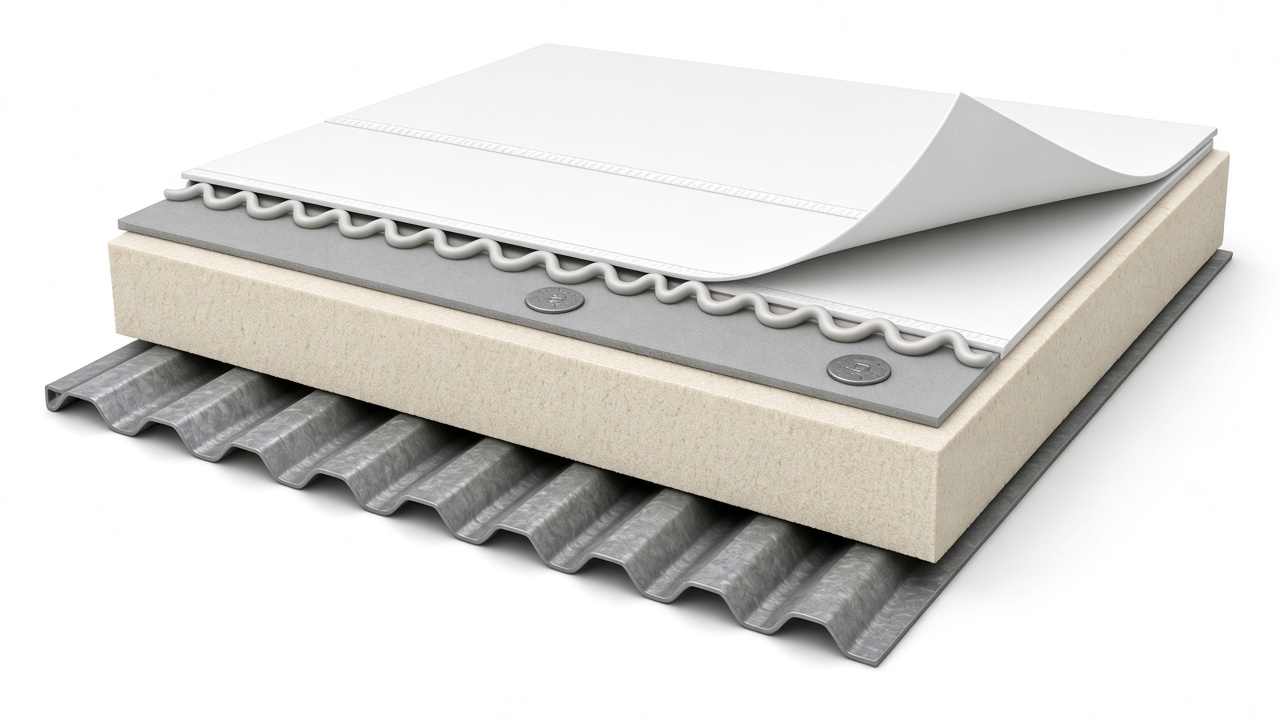
TPO, fully adhered
Layers, bottom to top:
- 1Steel deck
- 2Polyiso insulation
- 3Cover board
- 4Bonding adhesive
- 5White TPO membrane, heat-welded seams
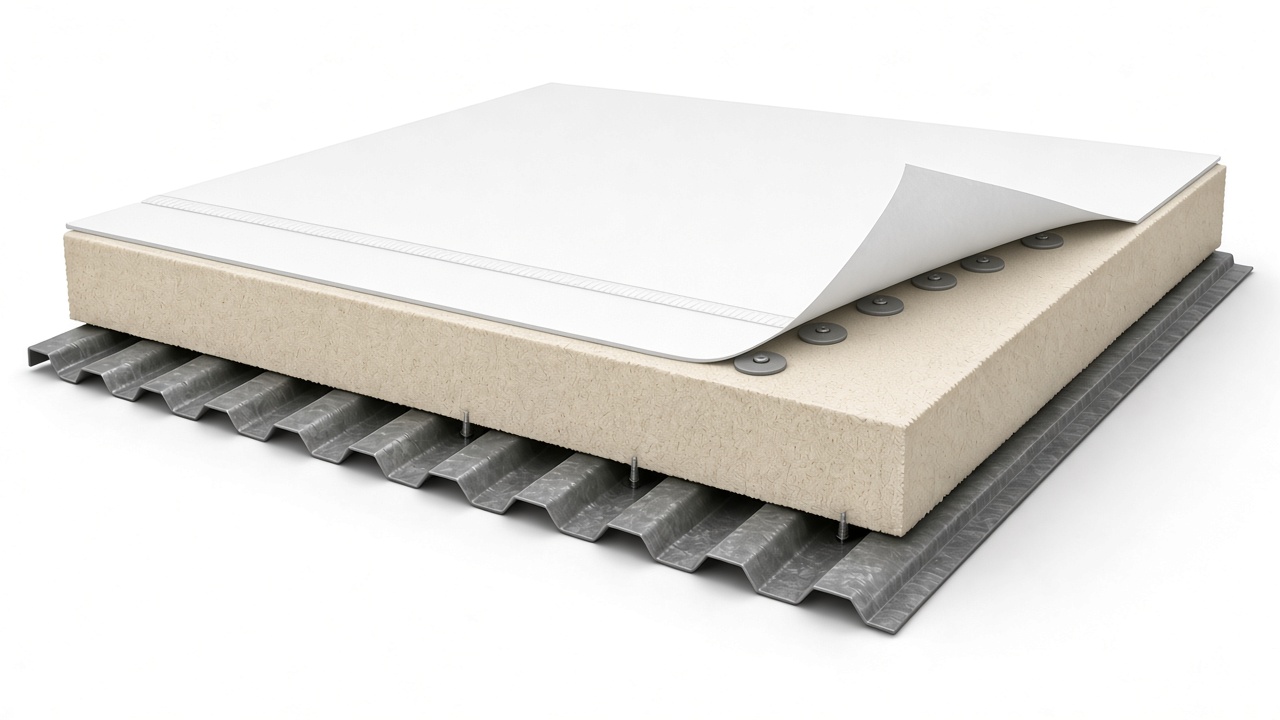
TPO, mechanically fastened
Layers, bottom to top:
- 1Steel deck
- 2Polyiso insulation
- 3Fasteners and plates
- 4White TPO membrane, heat-welded seams
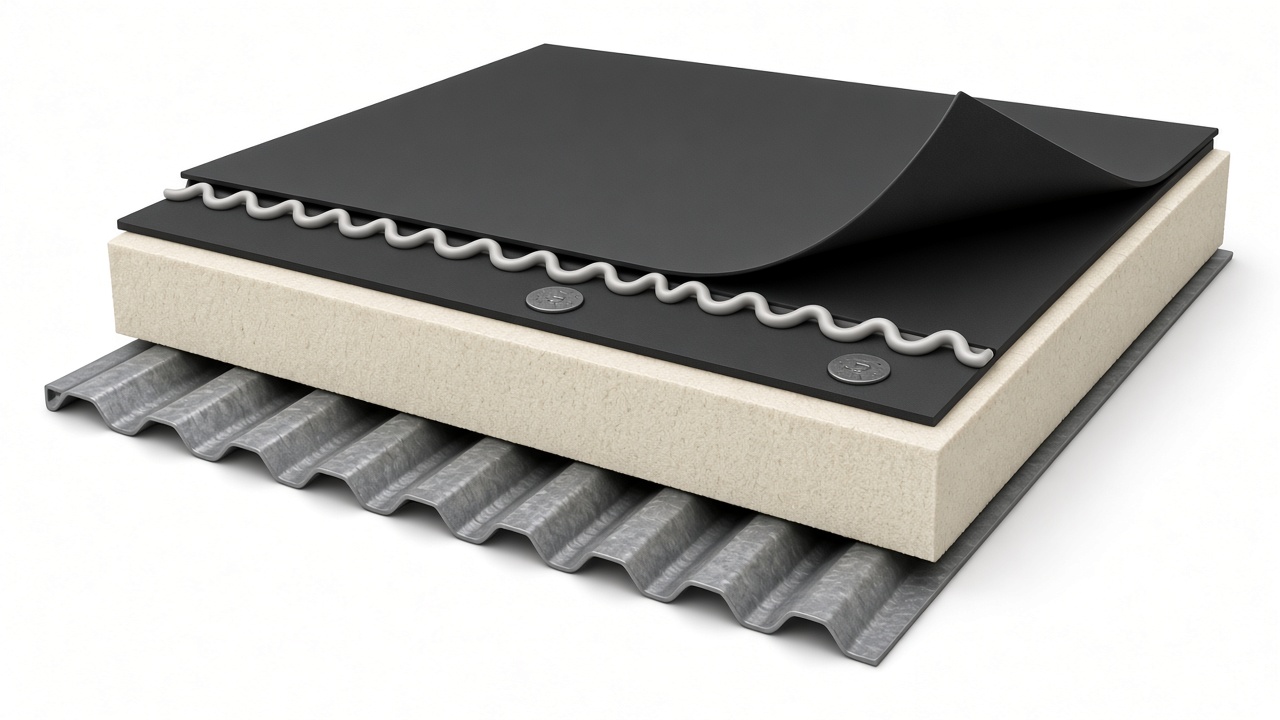
EPDM, fully adhered
Layers, bottom to top:
- 1Steel deck
- 2Polyiso insulation
- 3Cover board
- 4Bonding adhesive
- 5Black EPDM membrane, seam tape splice
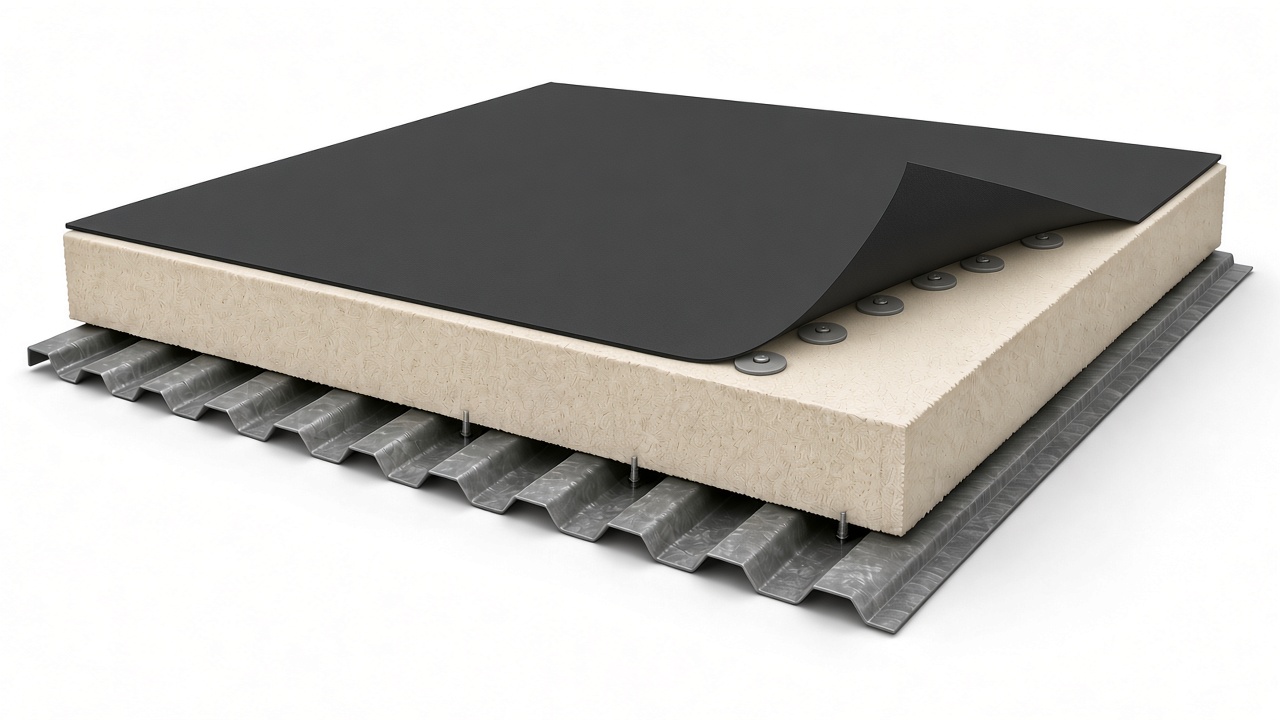
EPDM, mechanically fastened
Layers, bottom to top:
- 1Steel deck
- 2Polyiso insulation
- 3Fasteners and plates
- 4Black EPDM membrane, seam tape splice
Three questions. A better first conversation.
Tell us what's on the roof, what you're seeing and what matters most. You'll get a short roof brief and the questions we'd want answered on site.
Your roof. Your priorities. A sensible next step.
Answer the three questions and you'll see a starting path, a short checklist and a brief you can copy and send us.
A guide like this narrows the conversation. Only an on-site evaluation tells us what your roof can actually support.
Two proven materials. A system selected for your building.
TPO and EPDM are established choices for commercial flat and low-slope roofs. The right fit depends on the existing assembly, drainage, exposure, attachment requirements, and your plans for the property.
GenFlex TPO Roofing
A reflective surface with heat-welded seams.
GenFlex TPO is a reinforced roofing membrane whose seams are joined using hot-air welding. White TPO provides a reflective surface that can reduce solar heat absorption compared with darker roofing materials.
TPO is worth considering for warehouses, manufacturing facilities, retail buildings, offices, and other properties where a reflective single-ply system fits the project.
We specify the membrane thickness, insulation, attachment method, flashings, and perimeter details together so you know what you’re buying.
GenFlex EPDM Roofing
Flexible rubber roofing with established commercial applications.
GenFlex EPDM is a synthetic rubber membrane designed to withstand weather exposure, UV, ozone, and temperature changes. Its flexibility makes it a practical option for many commercial roof configurations.
EPDM seams and details use compatible primers, seam tapes, flashings, and accessories specified for the system.
We evaluate the appropriate membrane and attachment method for your building, including how the new roof will connect at walls, drains, equipment curbs, and edges.
TPO or EPDM: compare the whole system.
If the roof needs a new waterproofing layer, compare TPO and EPDM as complete assemblies: insulation, attachment, flashings and drainage included. Click through the layers to see what's under the membrane.
Light-colored. Heat-welded seams.
TPO is a single-ply sheet with seams welded together with hot air. The white surface reflects sunlight. How much that helps depends on the building's insulation, use and climate.
- Seams and flashings are exposed, so they're easy to inspect.
- It can be mechanically fastened, fully adhered or induction-welded, depending on the assembly.
- Works for recover or tear-off when the existing roof and system requirements line up.
Flexible rubber. Different seams.
EPDM is a synthetic rubber membrane, usually black. Its seams use compatible splice products and prep instead of TPO's hot-air welds.
- We look at seams, attachment and flashing details together as one system.
- It can be adhered, mechanically attached or ballasted, depending on the design.
- Ballast adds weight and covers the membrane, which makes inspection harder. Exposed systems are easier to check.
Illustration only, not a construction detail. *Cover board and other parts vary by spec.
What goes beneath the membrane matters.
A commercial roofing proposal should describe the complete assembly. Our scope addresses the components that support the roof’s performance:
Existing roof and deck
We identify what will be removed, what may remain, and how damaged decking or concealed conditions will be handled.
Insulation
The proposal identifies the insulation type and thickness. Where appropriate, tapered insulation and crickets can help direct water toward drainage points.
Cover board
Where specified, a cover board provides a suitable surface beneath the membrane and additional protection for the assembly.
Attachment
The membrane and insulation attachment are selected for the deck, building conditions, and required system performance.
Flashings and perimeter details
Walls, curbs, penetrations, drains, scuppers, and roof edges receive specific attention in the scope.
Maintenance access
Where needed, designated walkway protection helps protect the roof along routes to rooftop equipment.
You should be able to compare proposals based on what is actually being installed.
Full replacement or roof recover?
Full roof replacement
A tear-off allows the existing assembly to be removed so the deck and underlying conditions can be addressed before the new system is installed.
This may be the appropriate approach when the roof contains extensive wet materials, significant deterioration, attachment problems, or conditions that prevent a suitable recover.
We explain the removal scope, disposal, deck-repair allowances, and new assembly before work begins.
Recover over a suitable existing roof
Some buildings can receive a new GenFlex roofing system over an existing assembly after the necessary evaluation, preparation, and repairs.
Recover eligibility depends on the roof’s condition, moisture, attachment, existing layers, applicable requirements, and manufacturer acceptance. Wet or unsuitable materials still need to be addressed.
When recover is a viable option, we show you what stays, what changes, and how the proposed assembly qualifies for the specified warranty.
Recover or replacement?
Both can end with a new single-ply membrane on top. The difference is what stays underneath it.
Keep a sound base.
A recover can cut down on tear-off and disposal. We add the specified separation layer, insulation or cover board, then the new membrane.
- Check for moisture and how the old roof is attached.
- Confirm existing layers, weight and code requirements.
- Confirm the new assembly and what warranty it qualifies for.
A recover only works on the right roof. Wet or failing material has to come out first, and if the problems are widespread, replacement is usually the better call.
Rebuild from a known base.
Replacement removes the existing roofing down to the level in the scope, so we can see what's hidden and fix damaged material before the new system goes on.
- Inspect the deck and set repair allowances.
- Work out insulation, drainage and attachment details.
- Plan tear-off in sections, daily dry-in and closeout.
Your proposal spells out how much comes off, what gets replaced and how hidden damage is handled. "New roof" by itself isn't a scope.
Save the roof that's worth saving.
Restoration repairs and prepares a suitable existing roof, then adds a Fluid-Applied system on top. That's a different job from installing new TPO or EPDM sheets.
The prep is the job.
Moisture checks, adhesion tests, repairs and drainage come before any product gets picked. A coating can't make a rotten substrate sound, and it can't fix a roof that doesn't drain.
We install fiber-reinforced, Fluid-Applied roof restoration systems from Fluid Applied Roofing (FAR).
Your proposal names the system, the prep work and how it gets applied. Manufacturer warranty options up to 20 years may be available on eligible systems, subject to project approval and issued terms.
Start at the connections.
On metal roofs we look hardest at fasteners, seams, end laps and penetrations, then at rust and the panels themselves.
- Check the metalTell surface rust apart from rust-through, panel damage or structural problems.
- Repair and prepFix bad fasteners and laps, remove failed patches, then clean and prime as specified.
- Detail, then coatTreat transitions and seams before the base and finish coats go on.
Look below the surface.
EPDM, TPO, PVC and asphalt roofs each need a compatible spec. If there's already a coating up there, we identify it and test how well it's holding.
- Find what's dry and soundCheck moisture, attachment, splits, blisters, patches and what's underneath.
- Prep to match the systemClean, test adhesion, repair seams and flashings, and prime where required.
- Cover the whole roofWalls, curbs, drains, scuppers and penetrations are all part of the scope.
How the roof is secured
Fully adhered
The membrane is bonded to an approved substrate using the specified adhesive system. Seams are completed using the method required for TPO or EPDM.
Mechanically attached
The membrane is secured using an approved fastener-and-plate arrangement. Fastener selection and spacing depend on the roof deck and the requirements of the assembly.
Induction-welded TPO
For suitable projects, GenFlex TPO can be bonded to compatible plates beneath the membrane using induction-welding equipment, commonly associated with the RhinoBond system.
This provides another attachment option for qualifying assemblies. The roof’s suitability and manufacturer requirements determine whether we recommend it.
We explain the attachment method in your proposal and why it fits the building.
Up to 20-year GenFlex full-system warranty options
Eligible GenFlex roofing systems can qualify for full-system warranty coverage up to 20 years.
GenFlex’s full-system warranty provides coverage for qualifying materials and workmanship, including labor and material to repair covered leaks, subject to the written warranty’s terms and exclusions. Eligible full-system coverage is available on a No Dollar Limit basis.
Membrane-only coverage is different. Your proposal identifies the warranty type, term, requirements, and cost so you can evaluate the protection being offered.
Manufacturer warranty issuance depends on the approved assembly, installation requirements, inspection, and acceptance. Any separate Riley workmanship coverage is identified in your proposal.
Own the roof with a plan.
Access, drainage, upkeep and coverage belong in the decision, not just the membrane color or the first price you see.
Easier to inspect.
An exposed single-ply membrane lets you see the surface, seams, flashings and old repairs. Ballast and other cover make that harder.
Seeing the roof helps, but it won't always show you the leak. Water can travel inside the roof, so testing may still be needed.
A new roof still needs attention.
Keep drains and scuppers clear. Check edges, flashings and equipment areas. Keep a record of rooftop work and fix damage quickly.
GenFlex's owner guidance calls for twice-yearly roof inspections and clearing drains, gutters and debris after storms. Follow the upkeep and reporting terms of your issued warranty.
Know who covers what.
A full-system warranty and a product-only warranty are not the same thing.
Check who issues it, the term, what's covered, the exclusions and your upkeep duties. Riley's own workmanship coverage is written separately in your proposal.
Planned around the building below.
Your roof protects people, equipment, inventory, tenants, and daily operations.
Before installation, we discuss access, material staging, debris removal, rooftop equipment, sensitive areas, and scheduling. Weather and project conditions guide the work sequence and temporary protection.
You’ll know who to contact and how the project is expected to move forward.
1. Evaluate
Review the existing roof, leak history, drainage, and project goals. Identify any additional investigation needed.
2. Define
Provide a written scope with the proposed assembly, repair allowances, attachment method, and warranty options.
3. Install
Coordinate the work around the property and install the selected system to the applicable requirements.
4. Close out
Complete the project review, address required punch-list items, and provide the applicable warranty and maintenance information.
Work directly with Justin Riley.
Riley Roof & Exteriors is owner-operated, with a third-generation building-products background and experience on both the distribution and installation sides of the industry.
Justin works directly with building owners and property managers to explain the options, develop the scope, and coordinate the project.
You get straightforward pricing, clear communication, and a recommendation tied to the condition of your building.
Know what you're signing off on.
Straight answers before the first visit.
Should I choose TPO or EPDM?
It depends on the building, not on which membrane is more popular. GenFlex TPO is a white, reflective sheet with heat-welded seams. GenFlex EPDM is a flexible rubber membrane whose seams use rubber-specific splice products. We look at the existing roof, deck, drainage, rooftop equipment, exposure, attachment requirements and how long you plan to own the building, then recommend the system that fits and tell you why.
Can a new roof go over the existing one?
Sometimes. A recover needs a suitable base, and we have to verify moisture, attachment, existing layers, structural load, code requirements and what the manufacturer will accept. Wet or deteriorated material has to come out first. Your proposal spells out what stays, what comes off and how the new system goes on.
How is the new membrane attached to the building?
The attachment method is chosen for the deck, the insulation, wind requirements and the system specified. A fully adhered membrane is bonded to the substrate. A mechanically attached membrane is fastened through the seams into the deck. Induction-welded TPO bonds the membrane to plates that secure the insulation, without fastening through the membrane. Your proposal names the method and why it was chosen.
Is restoration just another word for replacement?
No. Restoration keeps a suitable existing roof and adds a Fluid-Applied system after prep and repairs. Replacement removes the roofing in the scope and installs a new system. A single-ply recover is a third option: a new sheet system over a suitable existing roof.
Will coating a roof fix trapped moisture or ponding water?
No. A coating doesn't dry out wet insulation, fix a weak deck or add slope. Wet material, drainage and structural problems need their own scope first. Products for areas that hold water have to meet the manufacturer's requirements.
What should I compare in commercial roofing proposals?
Compare the complete roof assembly, not just the membrane name. Look at the tear-off or recover scope, insulation type and thickness, cover board, membrane thickness, attachment method, flashing and perimeter details, drainage work, and the warranty type and term. Two proposals that both say "TPO roof" can describe very different work. Our written scope lists each of these items so you can compare line by line.
What drives the price?
The biggest factor is whether the existing roof is torn off or recovered. After that: insulation and cover board, deck repairs, membrane thickness, attachment method, flashing work at walls, curbs and penetrations, access and staging, and what the warranty you choose requires. We don't quote from a per-square-foot chart. We look at the roof and give you a written scope that shows what's being installed.
What warranty comes with a GenFlex TPO or EPDM roof?
GenFlex offers full-system warranties of up to 20 years for qualifying installations. Eligibility depends on the selected system and meeting manufacturer requirements, including installation by a GenFlex Licensed Roofer and manufacturer inspection. Full-system coverage is different from a material-only warranty. Your proposal names the warranty type, term, what's covered and the limits. A warranty term isn't a promise of how long the roof will last.
Can the building stay open during the work?
Usually, with a plan. Before work starts we agree on crew and delivery access, staging, which entrances and parking stay open, and how rooftop air intakes and HVAC units near the work are handled. Tear-off and fastening make noise and adhesives can smell, so we schedule that work around your operations. If anything needs a short interruption, we tell you in advance.
What does a commercial roof evaluation and proposal cover?
We start with the address, roof history and what you're seeing. The proposal covers prep, repairs, the roofing system, details, access, how hidden damage is handled and the warranty available. If the roof needs more testing, we say so.
Start planning your next roof.
Whether you need to address active leaks or budget for a future replacement, start with an evaluation of what is already there.
Send us the property address, a brief description of the roof, and what you want to accomplish. Roof photos or an existing report are helpful if you have them.
Request a Commercial Roof Evaluation
Considering restoration?
Some existing roofs may qualify for a fluid-applied restoration system. Explore our roof-restoration services to understand that option.