

Some jobs stick with you because of the work. Others stick with you because of where the work takes you.
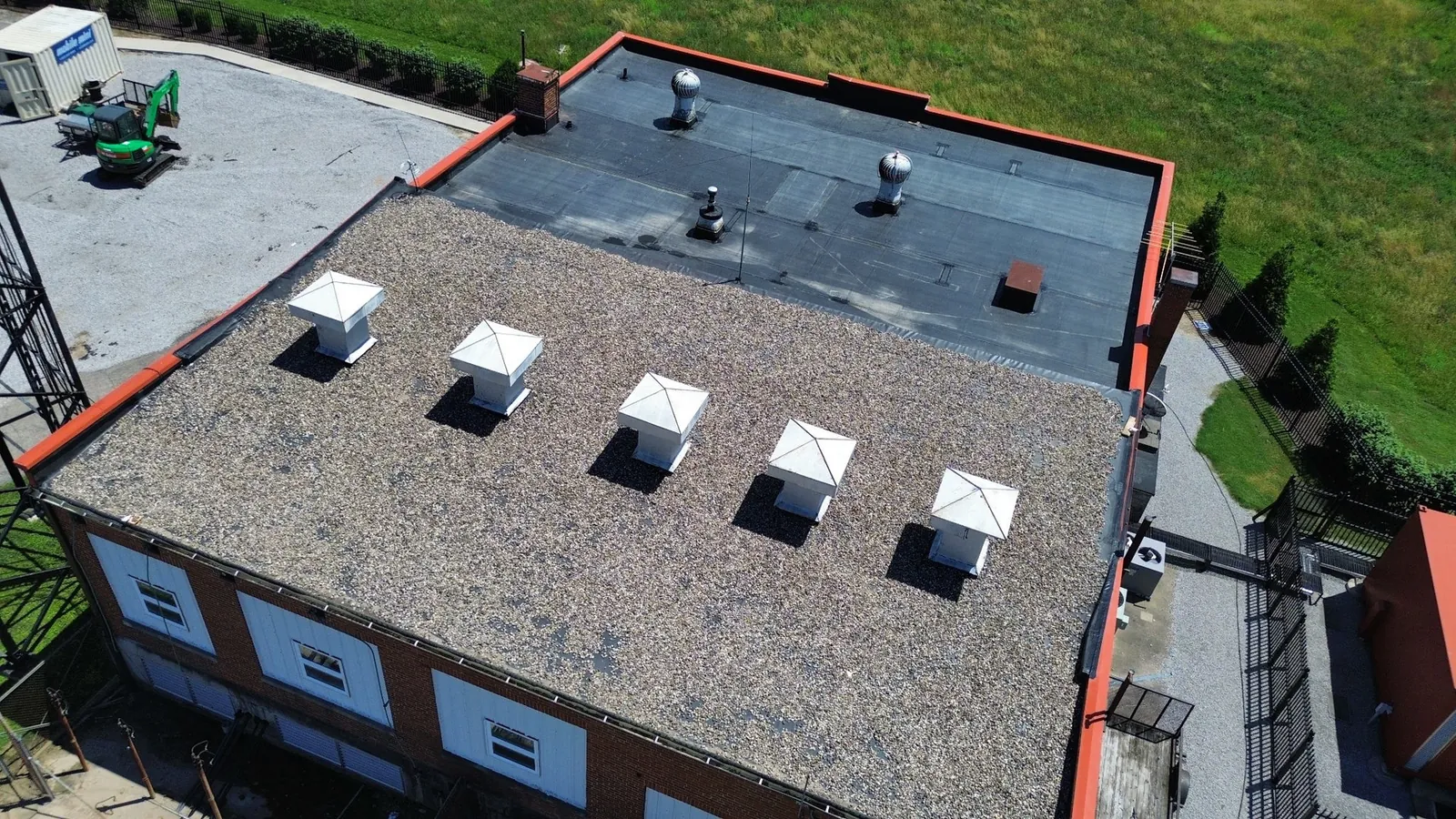
Earlier this year, Riley Roof & Exteriors was brought in to address serious roof leaks at the historic WLW transmitter facility on Tylersville Road in Mason, Ohio. It wasn’t our biggest commercial roofing project, but few buildings we’ve worked on have had a story like this one.
From the road, you recognize the enormous, unmistakable radio tower. What you don’t necessarily expect is what’s waiting inside the brick building below: old transmitters, banks of gauges and switches, a working shop that feels suspended in time, handwritten notebooks—and an astonishing connection to Cincinnati Reds history.
1928
WLW moves its transmitting operations to Mason.
831 ft.
The height of the distinctive Blaw-Knox tower.
500,000
Watts broadcast during WLW’s famous superpower era.
2026
The year our EPDM roofing work brought us inside.
A radio signal the country couldn’t ignore.
In 1934, Cincinnati entrepreneur Powel Crosley Jr. helped turn a transmitter site in rural Mason into one of the most extraordinary broadcasting facilities in the world.
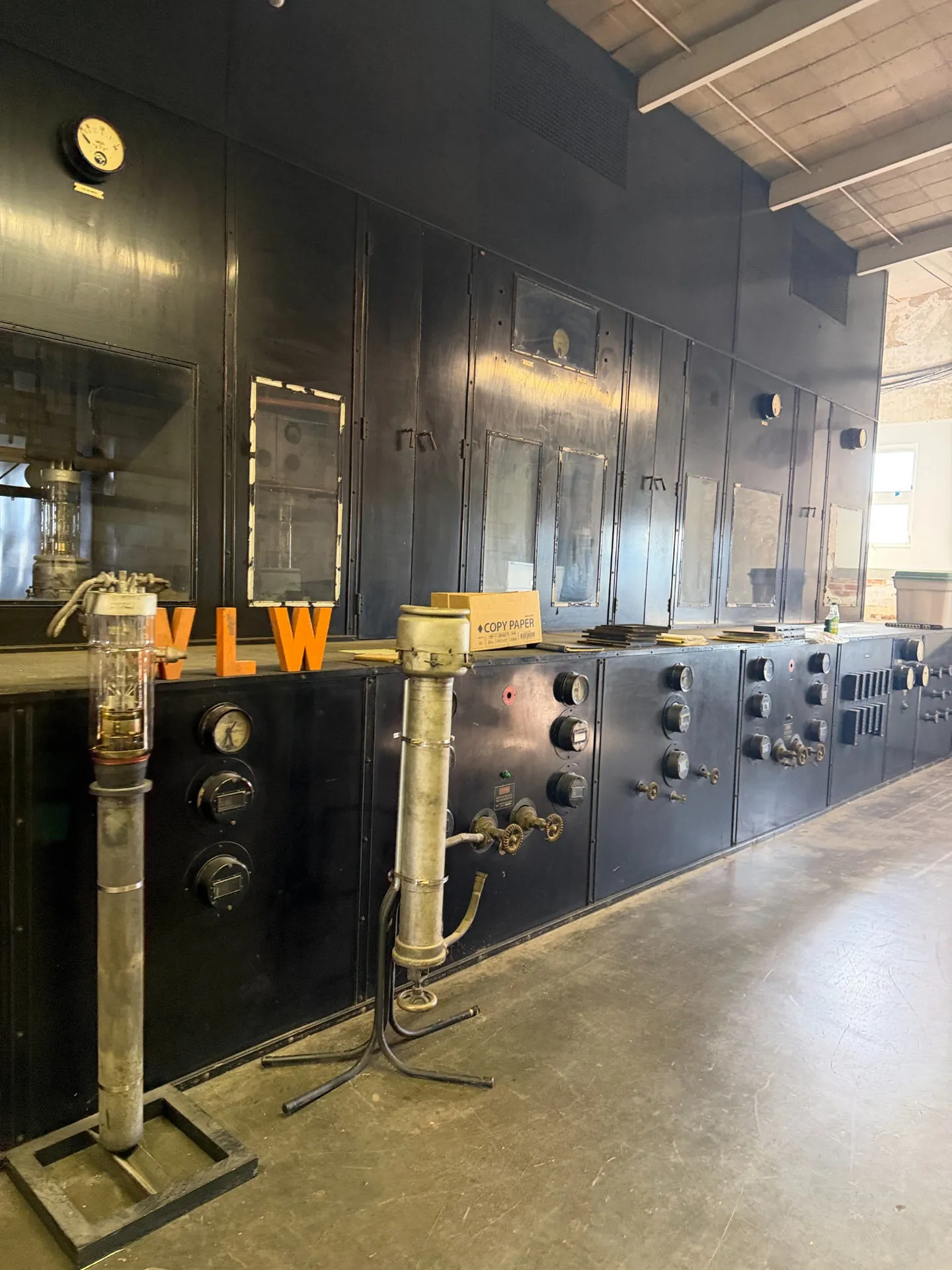
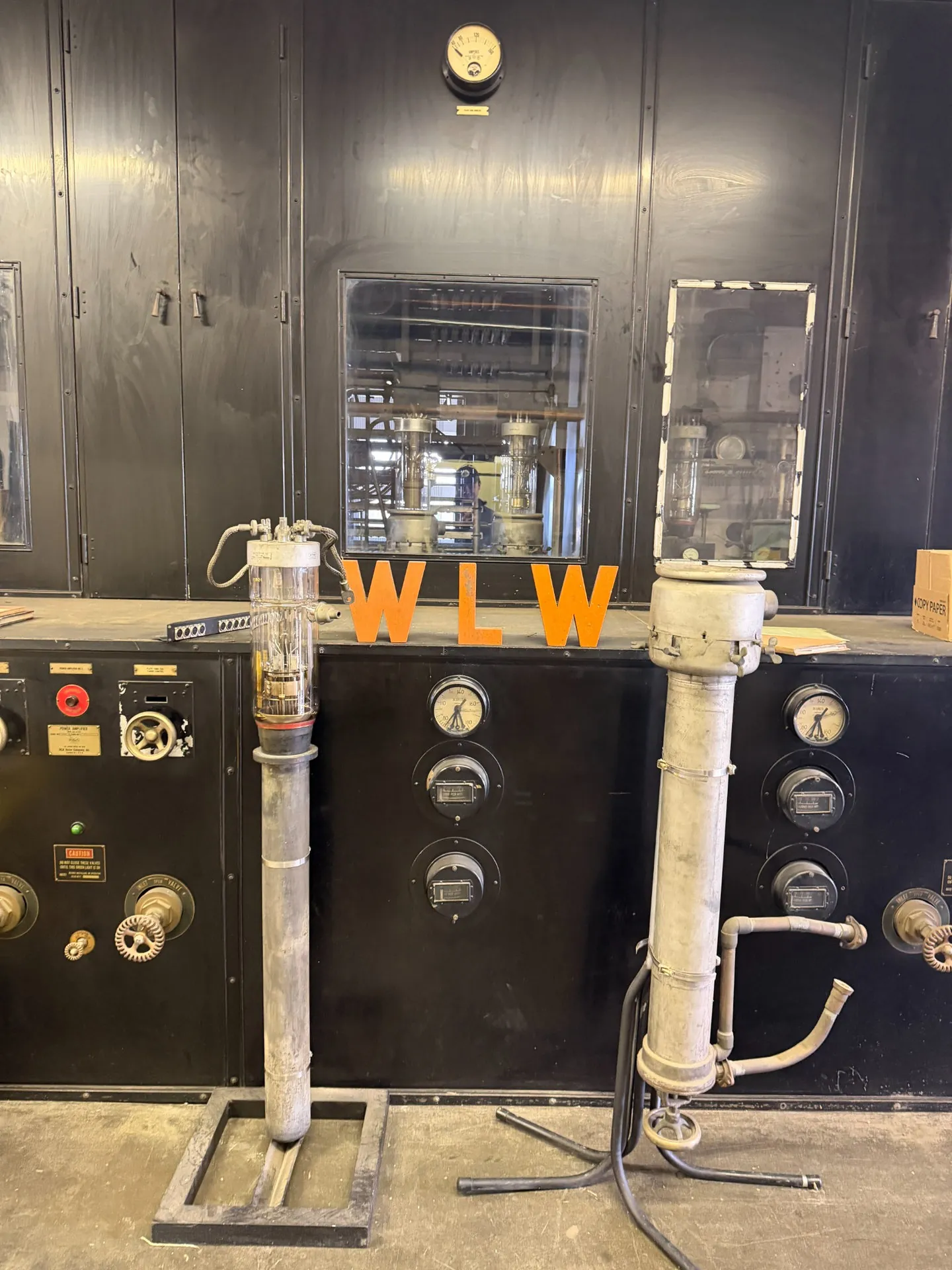
WLW began broadcasting in 1922 and moved its transmitter operations to Mason in 1928. In May 1934, President Franklin D. Roosevelt ceremonially inaugurated the station’s experimental 500,000-watt operation. That was ten times the usual maximum power of 50,000 watts for a commercial AM radio station.
Its 831-foot Blaw-Knox tower became a landmark. Its reach earned the station the nickname “The Nation’s Station.” The facility’s massive custom transmitter was a joint undertaking involving RCA, General Electric and Westinghouse.
And then there were the stories of the signal itself. Neighbors reportedly heard broadcasts coming through metal fences, rainspouts, faucets and farm equipment. For a roofing contractor visiting the site nearly a century later, the rainspout stories were a particularly good detail.
WLW eventually returned to 50,000-watt operation, but the giant tower and the history inside the building remained. Generations of listeners know the station by another familiar name: “The Big One.”
The things people left behind.
What struck us wasn’t just the size of the old equipment. It was how much everyday evidence of the people who operated and maintained it was still there.
It didn’t feel like a polished museum. Workbenches, reels of old wire, engineering tools, scattered parts and old cabinets made it feel as though the last person had simply stepped out for lunch—maybe several decades ago.
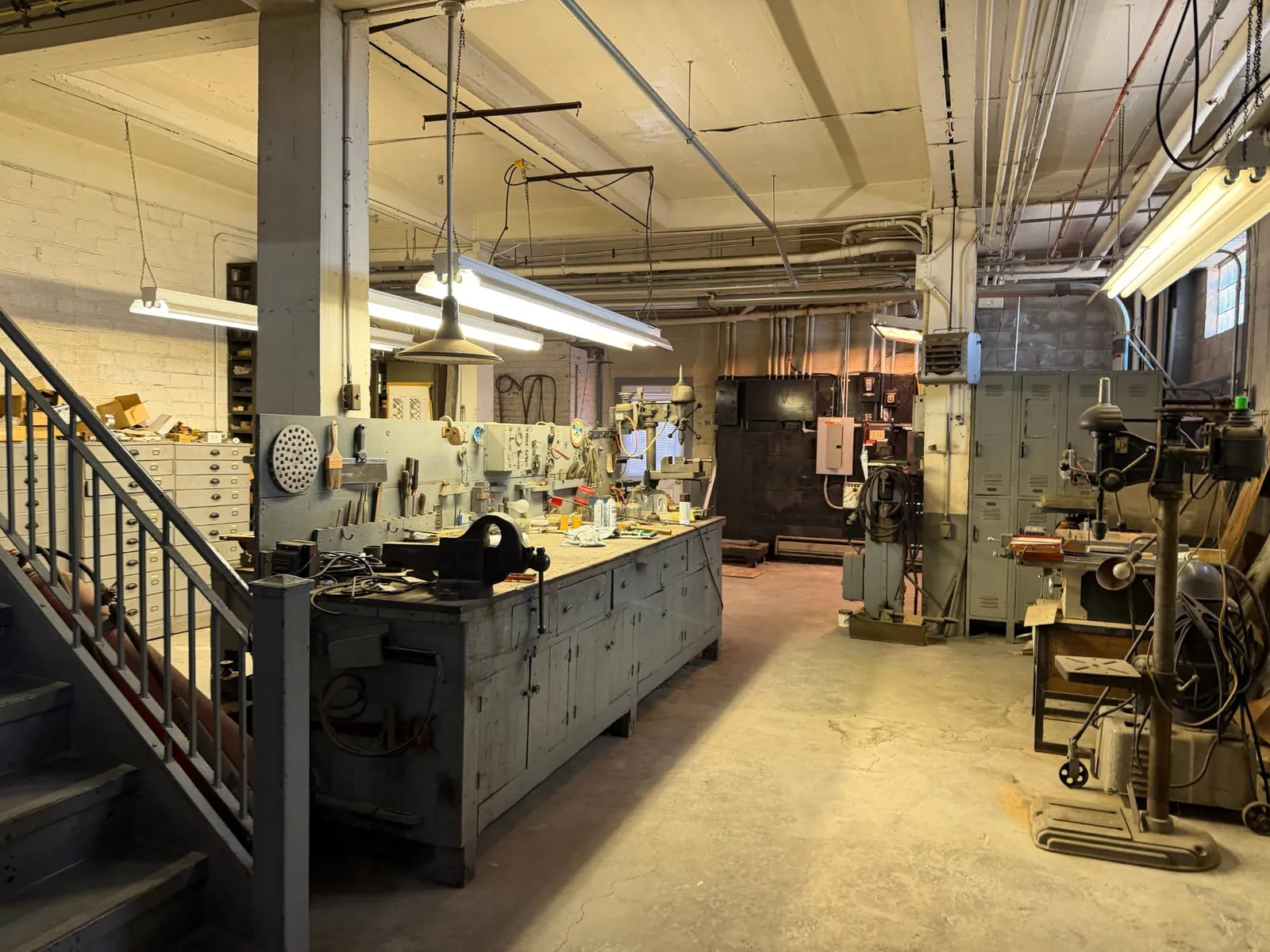
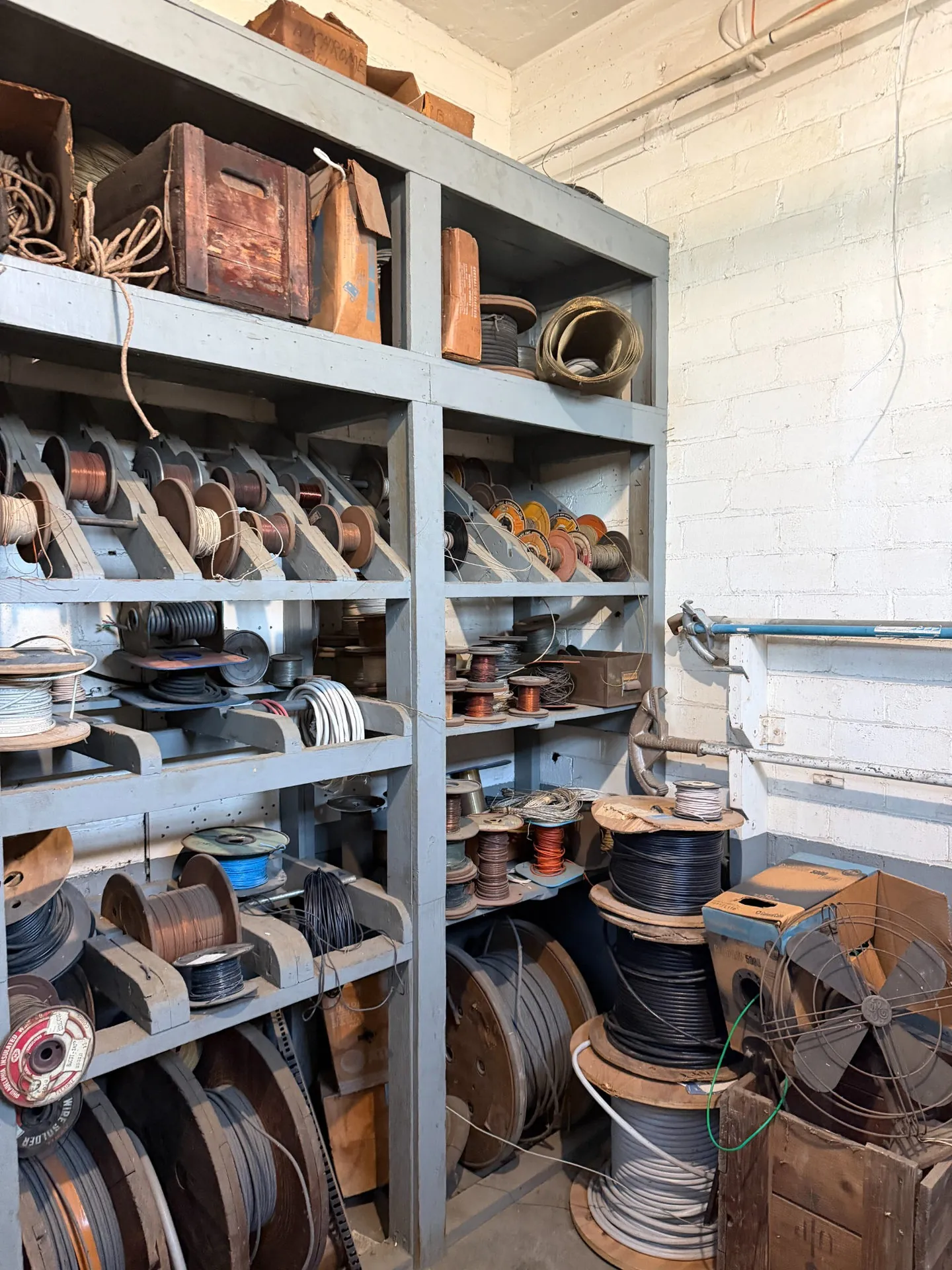
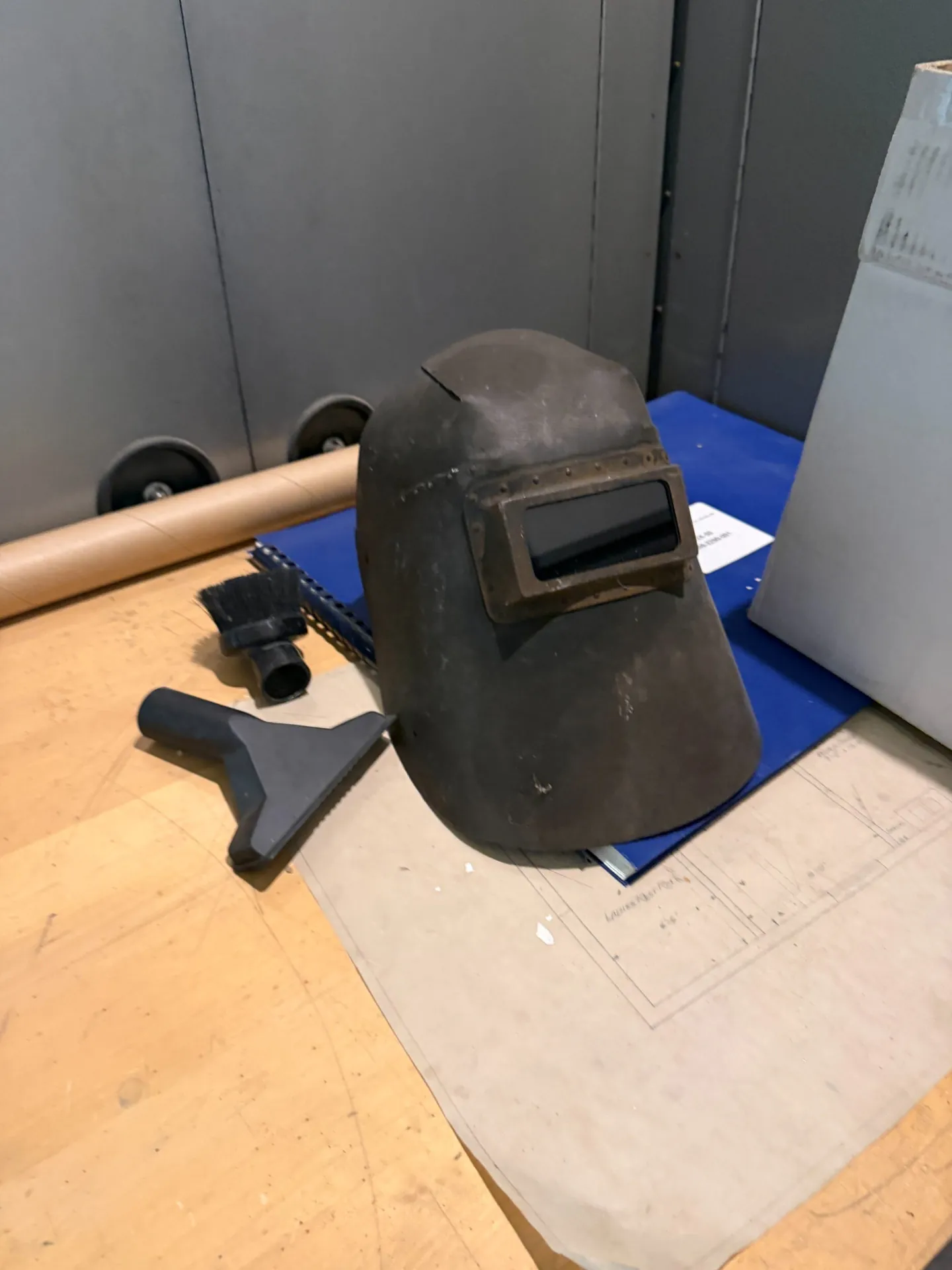
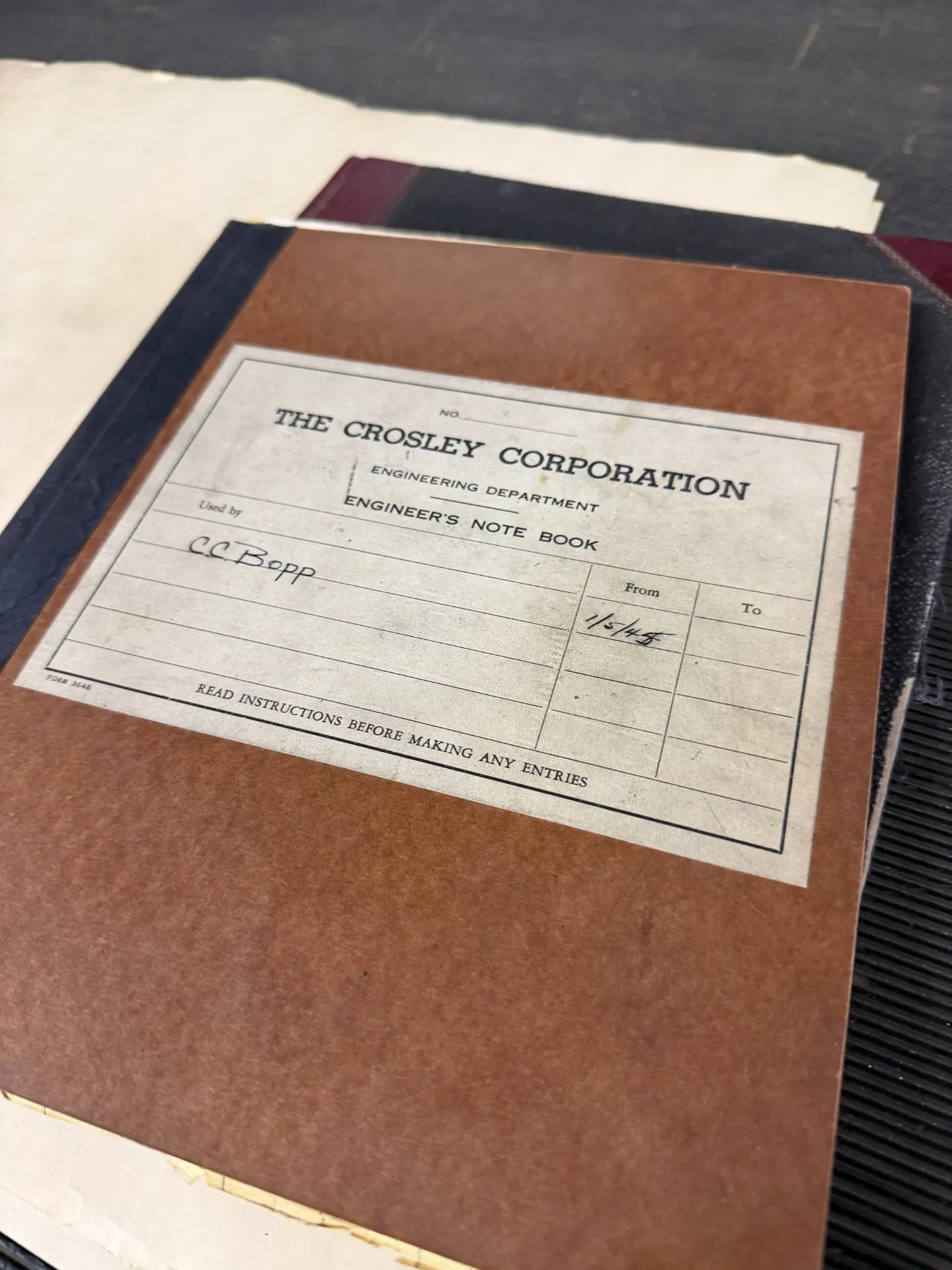
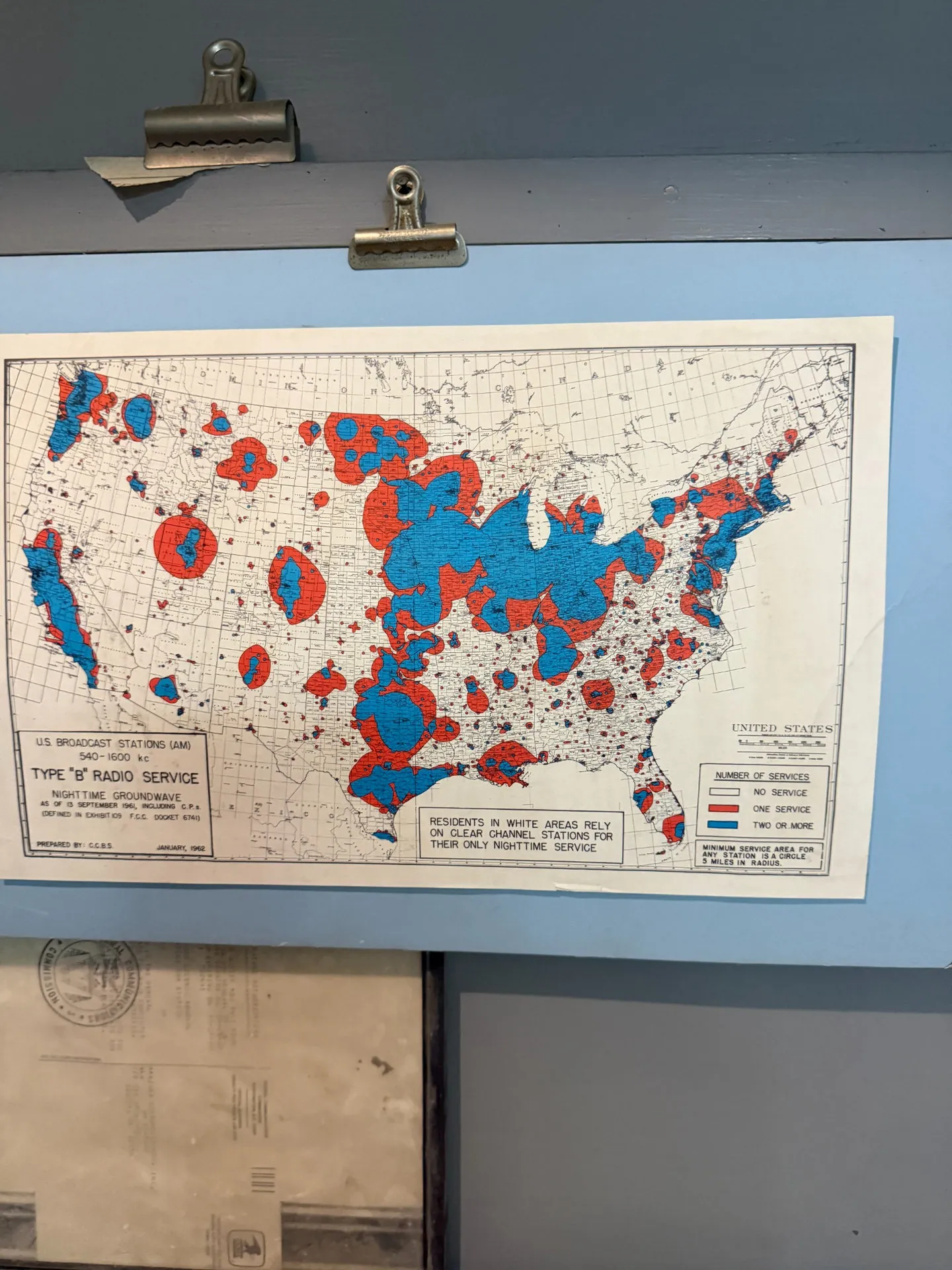
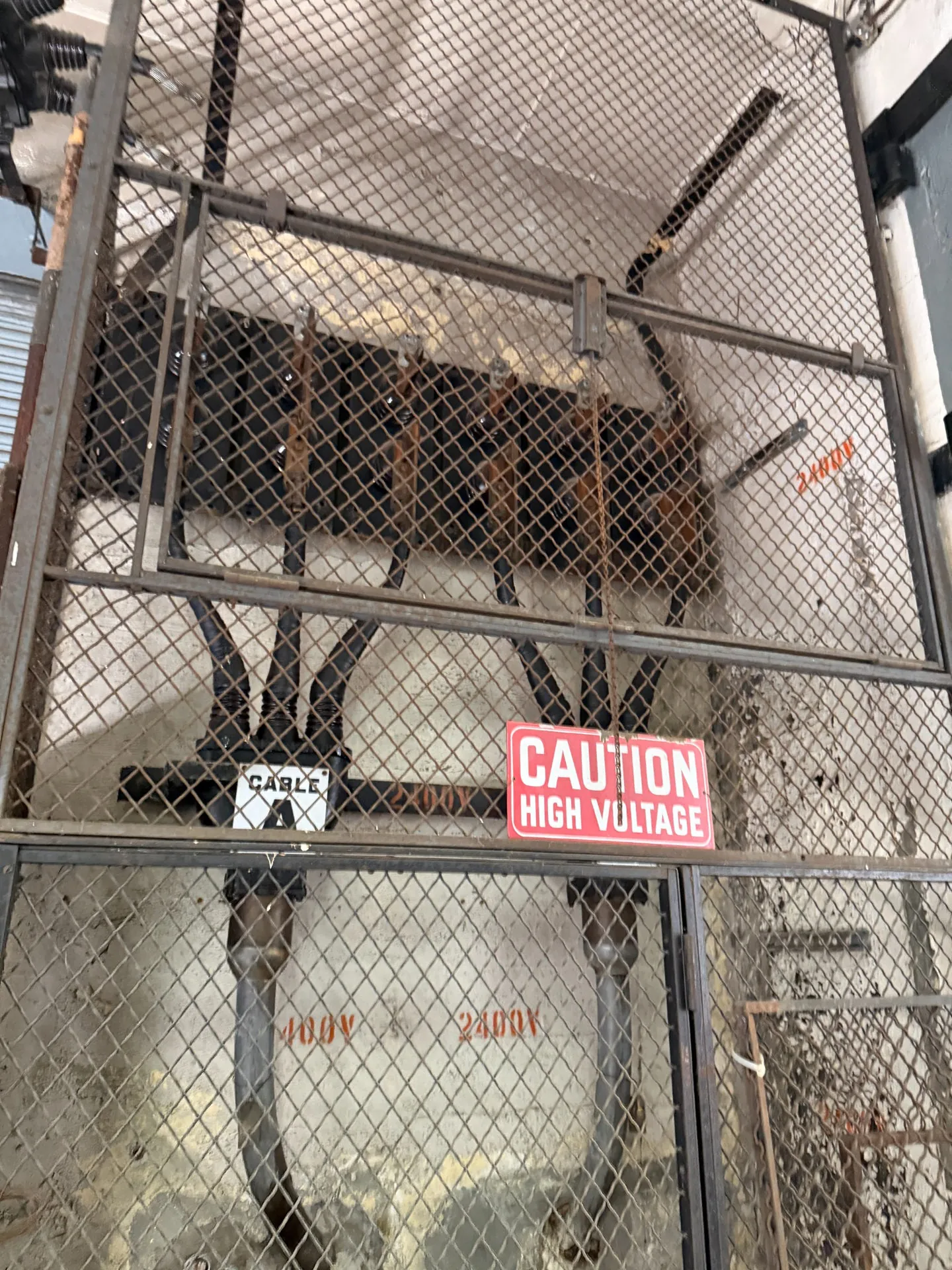
“There were handwritten notebooks still sitting around. Old equipment and switchboard parts. And then, on a random desk, we found something completely unexpected.”
Four days after baseball changed forever.
There, inside the WLW facility, was an old architectural and engineering drawing with an extraordinary title block: “Lighting Plan — Crosley Field.” It was marked The Crosley Radio Corporation and appeared to carry the date May 28, 1935.
Four days earlier, on May 24, 1935, the Cincinnati Reds had hosted the Philadelphia Phillies in the first night game in American or National League history. Powel Crosley Jr. owned the Reds as well as WLW. The new stadium lighting system was a technological showpiece: 632 lights transformed Crosley Field after dark.
At 8:30 that night, President Roosevelt pressed a telegraph key in the White House. The signal reached Cincinnati, and Reds executive Larry MacPhail activated the lights. More than 20,000 fans watched the Reds beat the Phillies 2–1 in a game that changed how generations of Americans would enjoy baseball.
We couldn’t believe that a piece of engineering history from that very week was just lying on a desk. The visible date on this drawing comes after the first game, so we can’t say it was the exact construction sheet used to install the original lights. But it was an original-period Crosley Field lighting plan, and seeing it in another of Crosley’s historic buildings was remarkable enough.
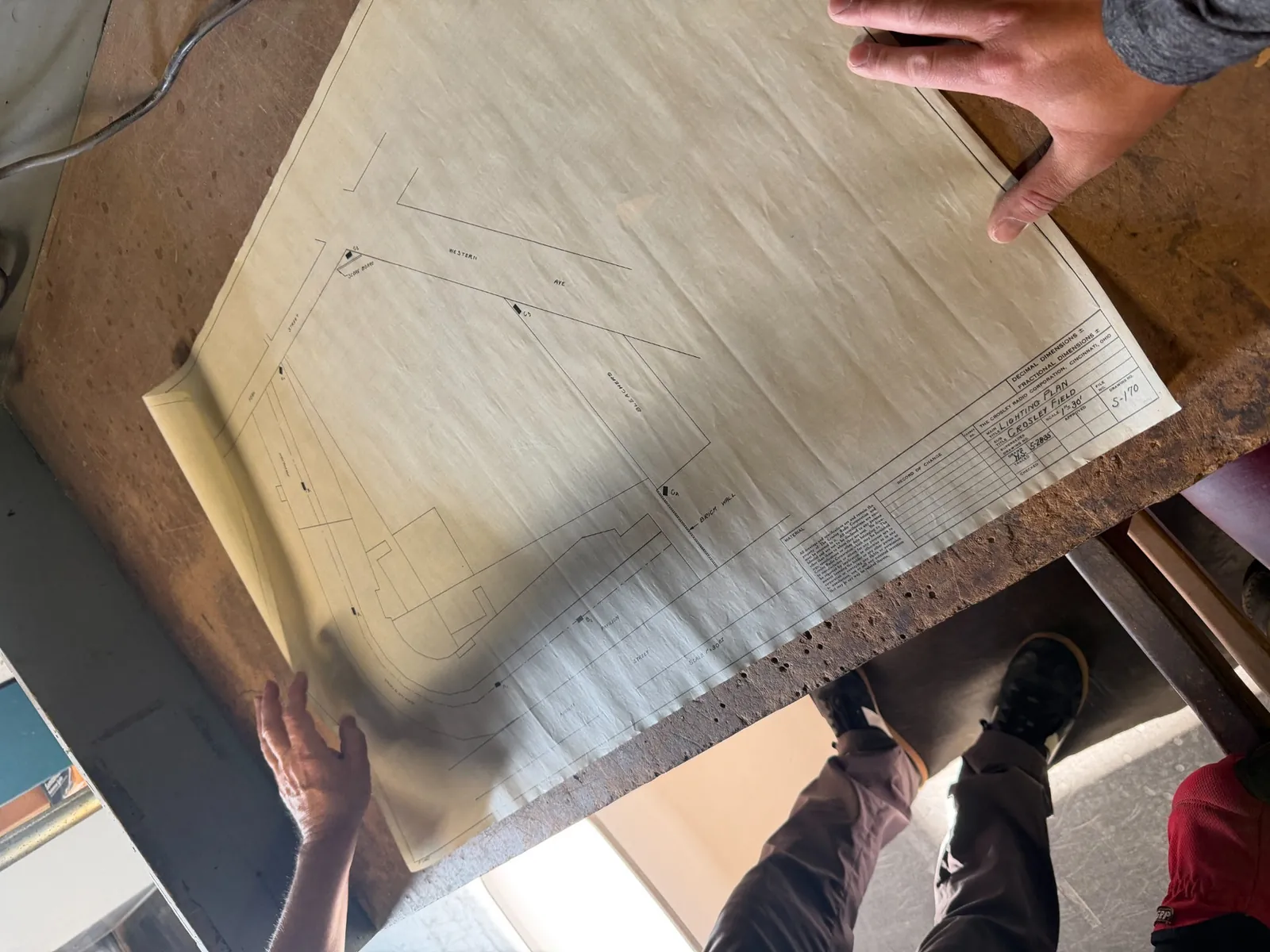
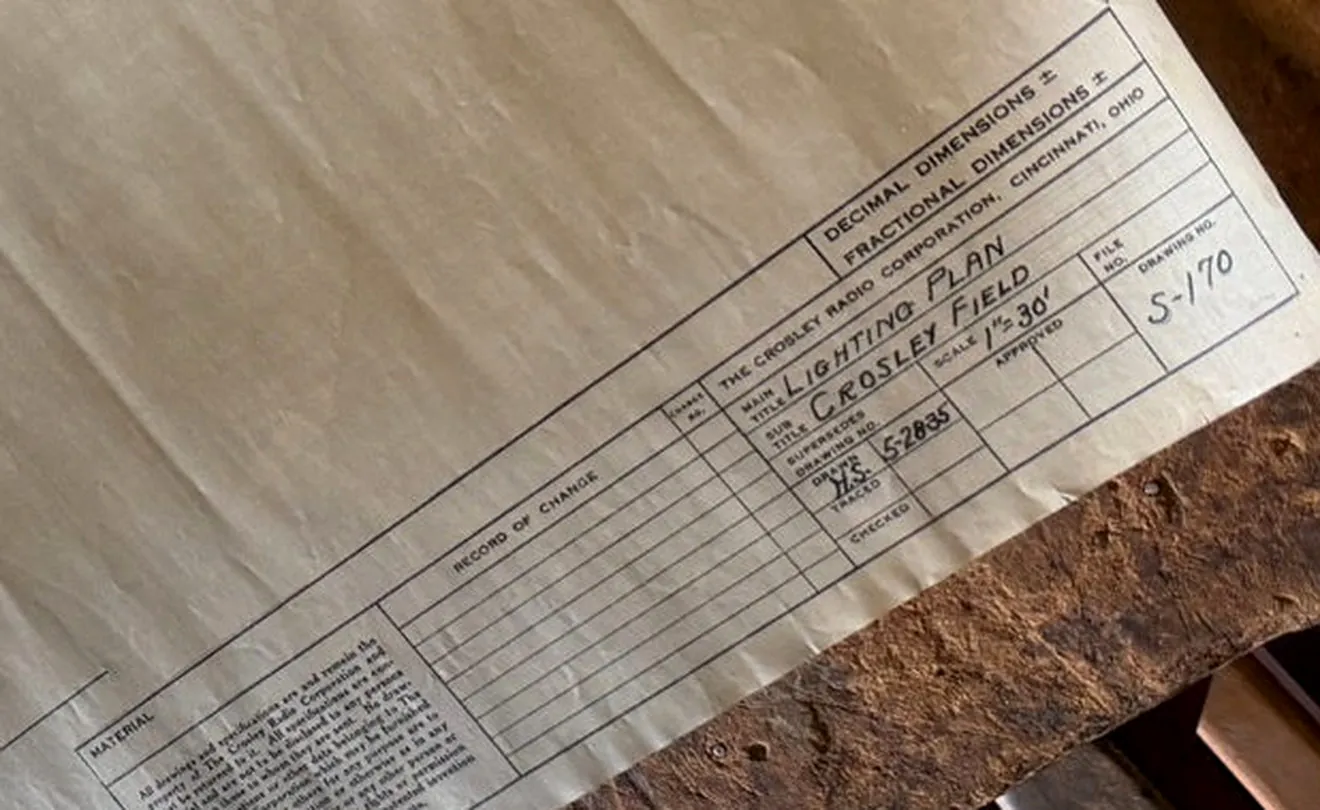
A detail worth looking closely at: the photographed drawing’s title block reads “Lighting Plan — Crosley Field,” identifies The Crosley Radio Corporation, and appears to be dated 5-28-35.
The roof had a serious problem.
The history was unforgettable. But it was a failing roof that brought us through the doors.
Both roof sections were experiencing serious water intrusion. Beneath the older roof assemblies was gypsum decking that had become a real concern: portions were cracking, deteriorating and falling in.
That changed the way we approached the work. On a roof like this, an aggressive tear-off could risk disturbing already compromised materials. Our goal was to improve the waterproofing system while avoiding unnecessary demolition of the vulnerable existing assembly.
Rather than forcing a single solution on both roof areas, we planned different GenFlex EPDM recover methods to suit the layers and conditions we found.
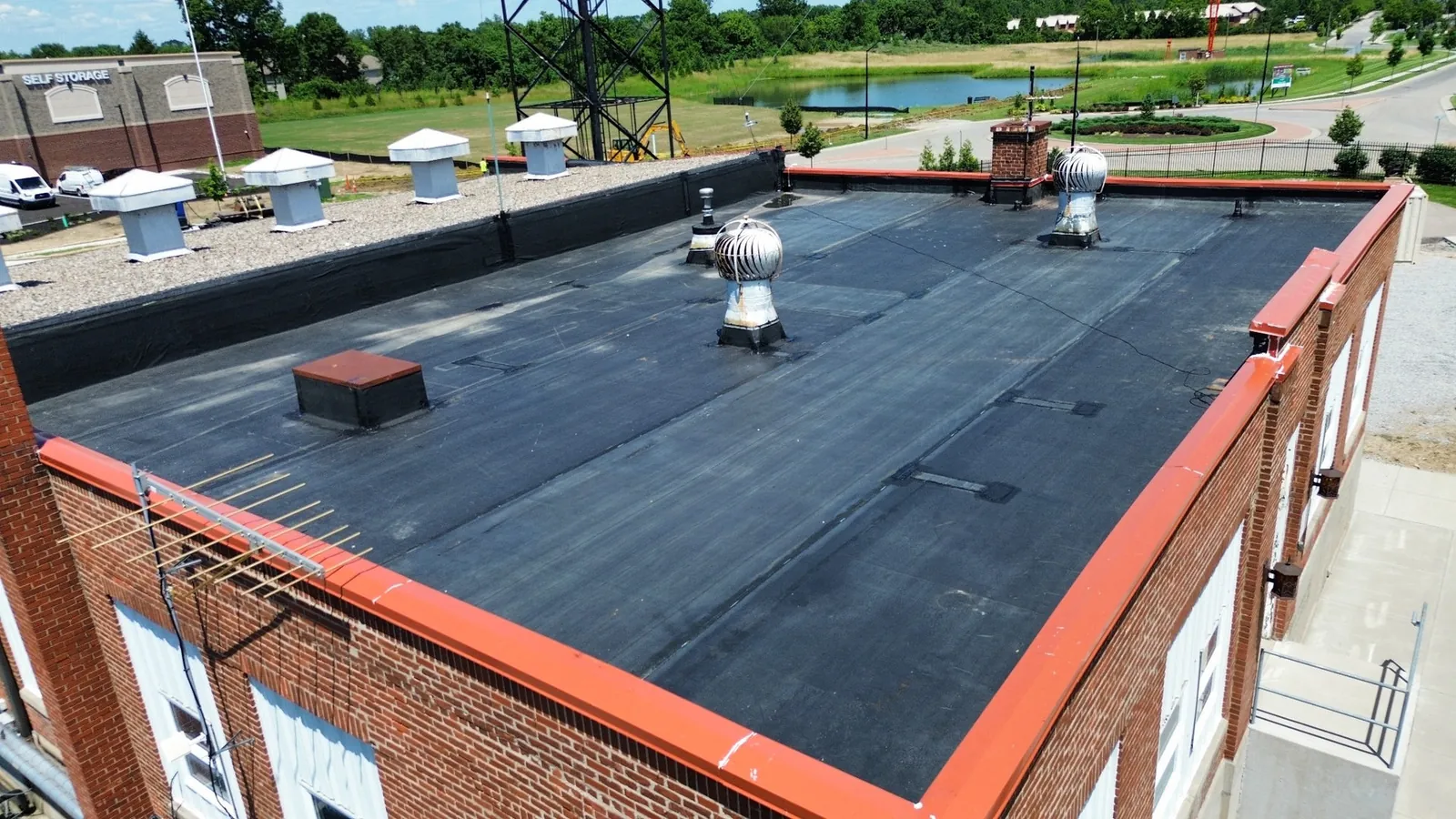
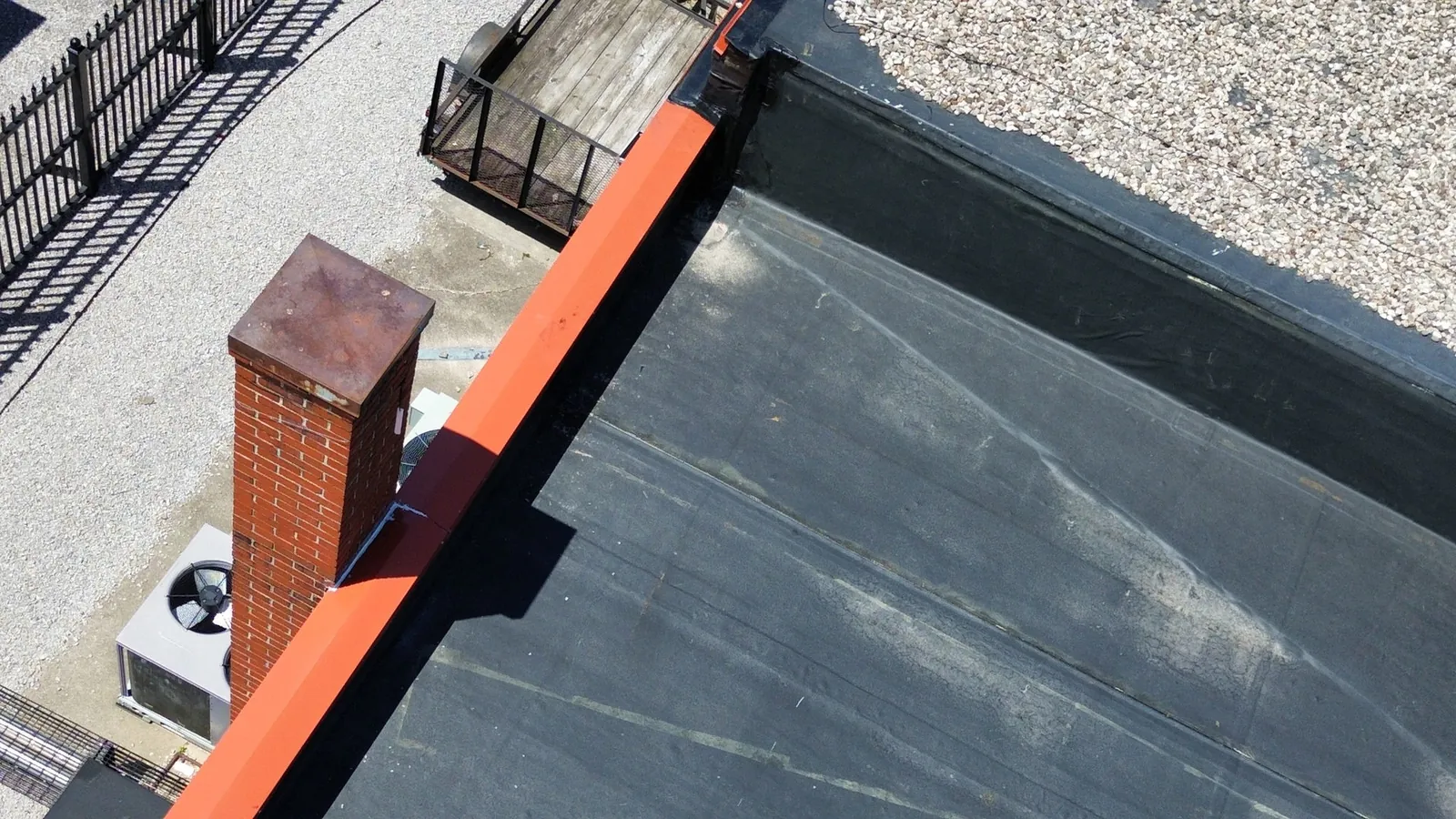
Ballasted EPDM roof area
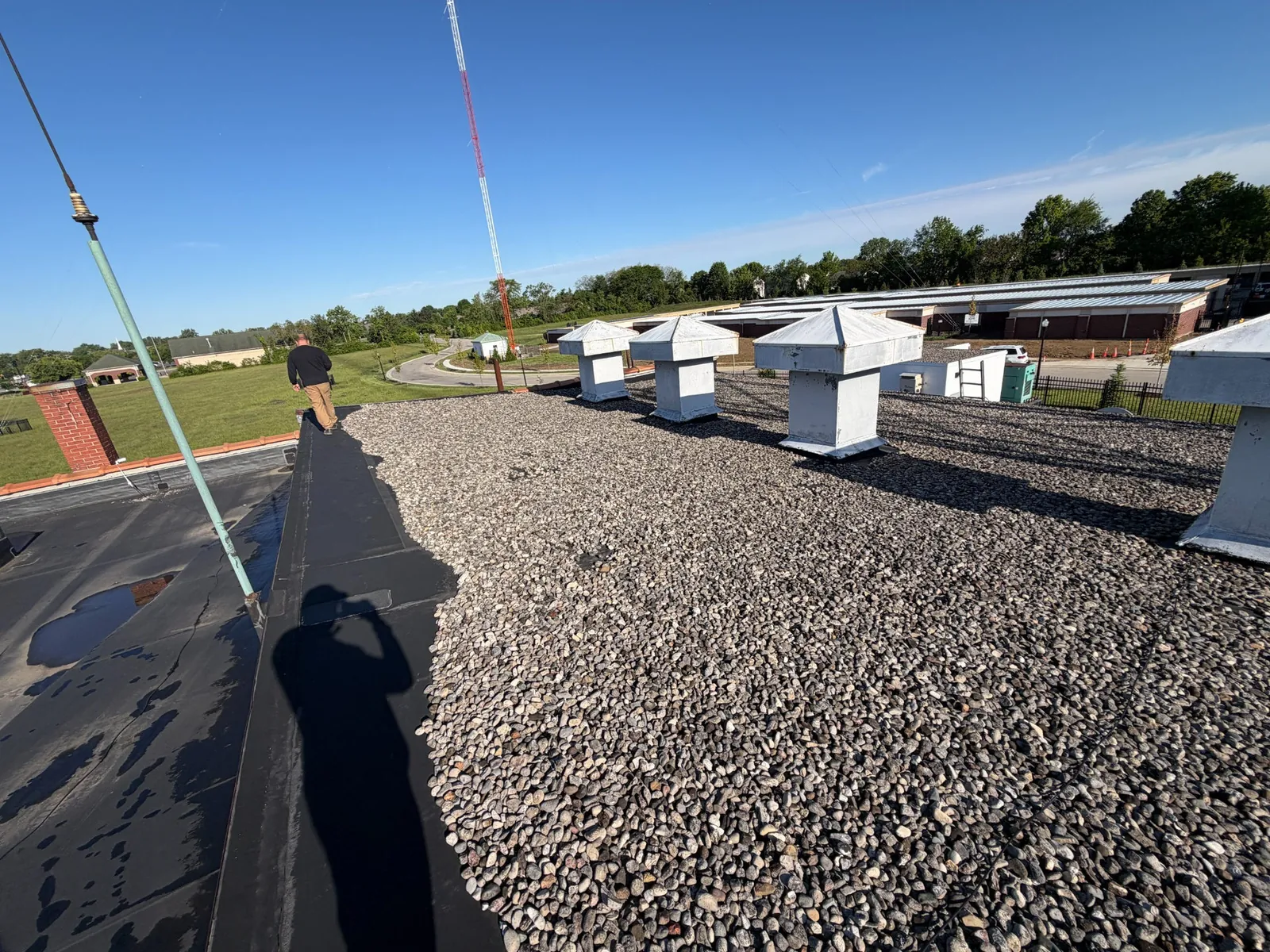
The existing ballast was carefully relocated and stockpiled for reuse. The older EPDM was relief-cut and prepared for a recover assembly, reducing unnecessary disturbance to the gypsum beneath it. We specified a new 60-mil reinforced GenFlex EPDM membrane, renewed flashing and termination details, new custom-fabricated 24-gauge metal copings, and updated gutter and downspout work before replacing the ballast.
Fully adhered EPDM roof area
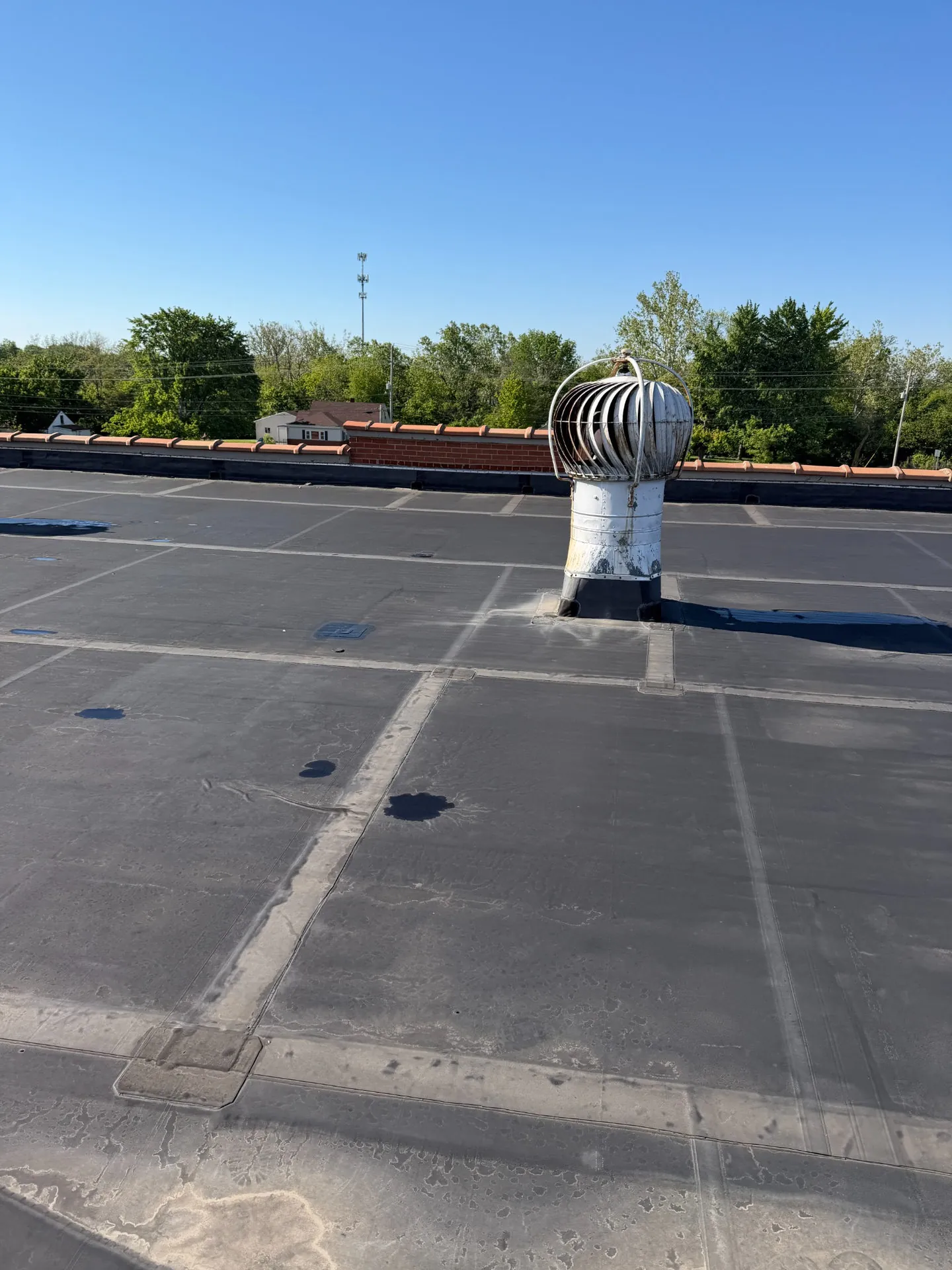
The second roof had an existing EPDM membrane and polyisocyanurate insulation fully adhered over the gypsum deck. Stripping those materials could have caused further damage. We specified a fully adhered 60-mil reinforced GenFlex EPDM recover, with new roof-to-wall detailing, penetration flashings, scupper relining and matching metal copings.
Why the approach mattered
Commercial roof restoration isn’t always about tearing everything off. On older buildings, the deck’s condition, existing insulation, moisture, attachment and compatibility requirements are all part of the decision. A recover isn’t right for every property, but this project shows why an informed, building-specific approach matters.
The work itself was not especially glamorous. Yet looking down at decades of roof layers, with one of America’s most recognizable radio towers looming nearby, it was hard to forget where we were working.
Part of something bigger.
We’ve worked on some interesting buildings around Greater Cincinnati. Few have been quite like this one. Standing under the tower, seeing the old transmitter equipment, looking through decades-old notebooks and finding Crosley Field drawings on an ordinary desk was a reminder that some buildings contain much more than the businesses they house.
Our part in the story was modest: two roof areas, a thoughtful EPDM recover, and careful attention to an aging deck. But the building belongs to a much larger history of Cincinnati engineering, broadcasting and baseball.
We came to fix a roof.
We left with a story we’ll tell for years.
Historical references & editorial notes
Broadcasting history: Ohio Historical Marker, Blaw-Knox Antenna. First Major League night game: Major League Baseball and GE’s historical account. WLW equipment context: WOSU/WVXU.
All project photographs are Riley Roof & Exteriors photographs supplied for this case study. The drawing date is based on a photographed title block and is described as it appears; the drawing’s exact revision history was not independently established. Roof photographs are intentionally captioned as site views rather than “before” or “after” without confirmation of their construction stage.