

Asphalt shingles dominate residential roofing for one reason: they’re the most practical compromise.
They’re affordable, widely installable, flexible on complex rooflines, and easy to repair. That makes them the default choice for most homes. It also means they are, by design, a limited-lifespan product.
That’s not an insult to asphalt.
It’s just the reality of how the material works.
Asphalt roofs are engineered to perform well for a defined window of time and then be replaced. Anyone selling them as a “forever” solution is either misinformed or being dishonest.
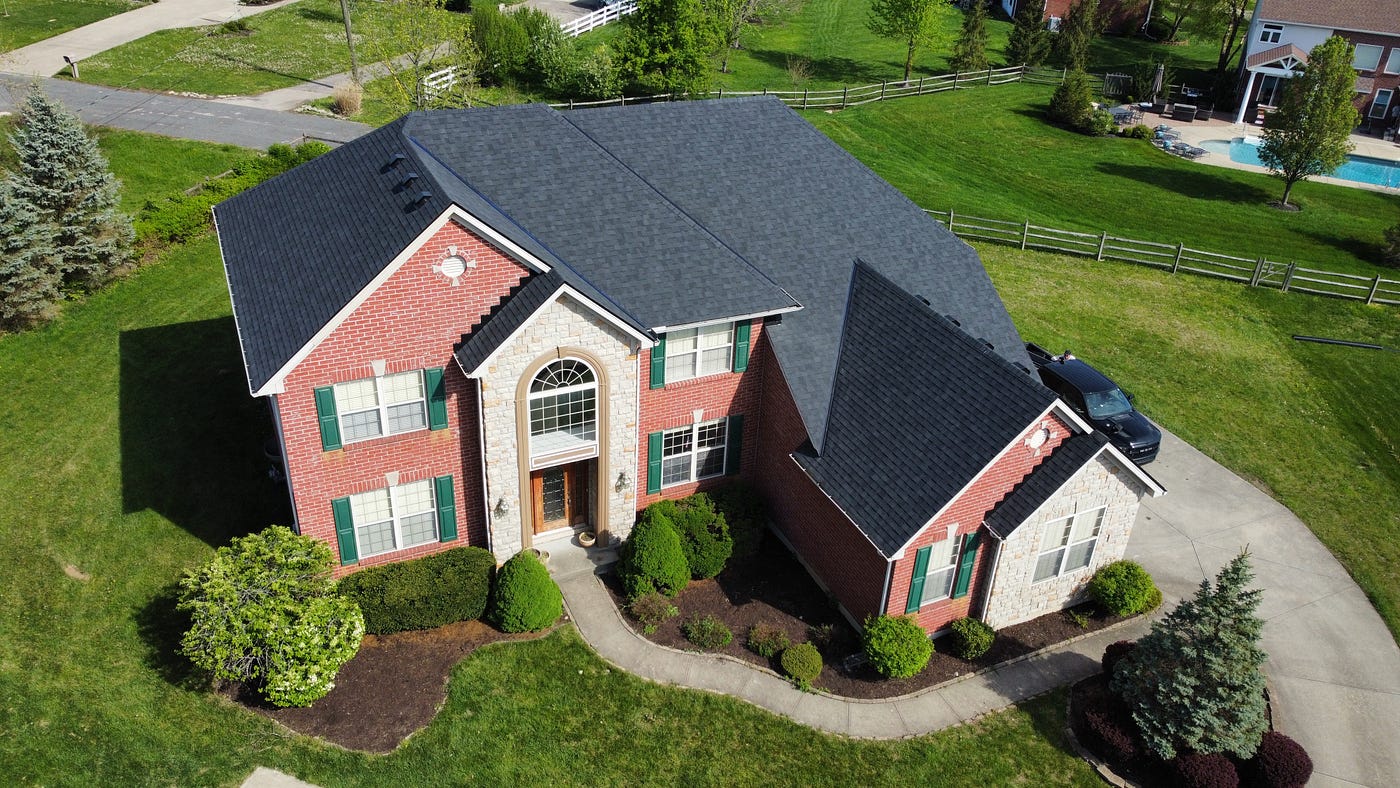
Three-Tab Shingles Are Effectively Obsolete
Three-tab shingles are rarely installed anymore and are quietly being discontinued across the industry.
They still exist on paper, but in practice:
- Wind resistance is poor
- Dimensional stability is weak
- Aging is fast and uneven
- Performance expectations no longer match modern standards
Replacing a roof today with three-tabs is almost always a downgrade. The industry has moved on for good reason.
Builder-Grade Architectural Shingles: The Most Regretted Choice
The most common mistake homeowners make is replacing a roof with builder-grade architectural shingles.
These products technically meet code and look fine when they’re brand new — but they sit at the lowest tier of laminated asphalt.
Common examples include:
- Owens Corning Oakridge
- Certainteed Landmark (standard, non-Pro)
- GAF Natural Shadow
- IKO Cambridge
These shingles exist to hit a price point. They are not where manufacturers focus their innovation.
This is the tier most homeowners regret choosing 10–15 years later.
Where 90% of Homeowners Should End Up (If They Choose Asphalt)
If a homeowner is going to stay with traditional laminated asphalt — which most will — there is a very clear “right lane”:
👉 The manufacturer’s flagship laminate, installed by a legitimate factory-certified contractor.
This tier includes products like:
- Owens Corning Duration
- CertainTeed Landmark Pro
- GAF Timberline HDZ
- IKO Dynasty
This is where roughly 90% of homeowners should land if the advice is honest.
Why?
Because this is where manufacturers:
- Spend the most R&D money
- Re-engineer adhesives and sealants year over year
- Improve wind ratings and mat technology
- Test new granule blends and bonding systems
These products are the backbone of the brand. They get the most iteration, the most testing, and the most real-world feedback.
They are not exciting.
They are simply the most refined asphalt roofs available.
Designer / Luxury Shingles: Thicker, Heavier, but Not Iterated as Often
Designer shingles are thicker and heavier, and that mass can help longevity. They also look great.
What homeowners rarely hear is the tradeoff:
Luxury shingles:
- Are updated far less frequently
- Don’t receive the same year-over-year reformulation
- Evolve mostly in appearance, not chemistry
They are niche products.
You’re often paying for thickness and aesthetics — not faster material evolution. That doesn’t make them bad, but it does mean they’re not automatically “better” in all cases.
Metal Roofing: Long-Term Performance When Done Correctly
Metal roofing is a legitimate step up in longevity — when done right.
Standing seam metal roofs can realistically last 40–60+ years. They don’t degrade from UV the way asphalt does and they shed water extremely well.
That said, metal roofing is highly installer-dependent.
And to be clear:
I would never install an exposed-fastener metal roof on someone’s house.
Exposed fastener systems belong on barns, shops, and utility buildings — not primary residences. Fasteners, washers, and penetrations are inherent failure points over time.
Standing seam is the only metal system that belongs on a home.
Metal roofs still require:
- Proper detailing
- Thoughtful penetrations
- Correct underlayment systems
They are not maintenance-free — but for long-term homeowners, they can dramatically reduce replacement cycles.
Brava: A Different Category Entirely
Brava doesn’t belong in the same conversation as asphalt.
A Brava synthetic slate or tile roof should be thought of as the equivalent of installing three asphalt roofs back-to-back in terms of longevity.
That’s not marketing — that’s practical math.
If a quality asphalt roof lasts ~25 years, a properly installed Brava system can realistically span 75+ years.
That changes the decision entirely.
Brava makes sense when:
- The home is a family or legacy property
- The homeowner plans to stay long-term
- Structural suitability is confirmed
- Upfront cost is weighed against lifetime replacements
Just like standing seam metal, Brava is about eliminating future roof replacements, not delaying them.
The Honest Takeaway
- Asphalt shingles are a necessary compromise, not a forever solution
- Three-tabs are obsolete
- Builder-grade laminates are a false economy
- Flagship laminated shingles are the correct asphalt choice for most people
- Metal roofing and Brava are long-term plays for long-term homes
- Price always matters — but lifetime value matters more
If someone plans to live in their home long-term, metal or Brava can remove roofing from the equation entirely.
If they don’t, a flagship laminate asphalt shingle is usually the smartest, most rational choice.
No hype.
No gimmicks.
Just reality.
One Last Thing Most Homeowners Miss: A Roof Isn’t a Shingle
The biggest mistake homeowners make is thinking a roof is just the shingle they choose.
It isn’t.
A roof is a system — decking, underlayment, ventilation, flashing, fastening patterns, and edge details all matter just as much as the surface material. You can put the “best” shingle on a poorly designed system and still end up with premature failure.
This is also where upgraded systems come into play.
Programs like FORTIFIED Roof focus on strengthening the entire roof assembly — not just the shingle — by addressing things like attachment, edge protection, and water management.
You don’t need a FORTIFIED-style system on every home.
But understanding that the roof works as a system — not a product — changes how smart decisions get made.
And in the long run, system design matters more than the logo on the shingle.
Why This Perspective Exists
This perspective isn’t theoretical.
At Riley Roof & Exteriors, we spend most of our time dealing with roofs after the brochures stop being accurate — years down the road, after weather, heat, and shortcuts have had time to show up.
That means we see:
- Which shingles actually hold their shape
- Which systems fail early despite “good materials”
- Where manufacturers improve products year over year
- And where they don’t
Most homeowners only experience one or two roofs in their lifetime. We see hundreds — often at the point where the original decisions start to matter.
This article isn’t meant to push a product or a brand. It’s meant to explain how roofing decisions age in the real world, long after the install crew is gone and the warranty language gets complicated.
If there’s a single takeaway, it’s this: roofing outcomes are determined more by system design and material tier than by marketing claims or labels.